
Government of Pakistan launched upgraded digital platform to strengthen human rights monitoring and reporting obligations
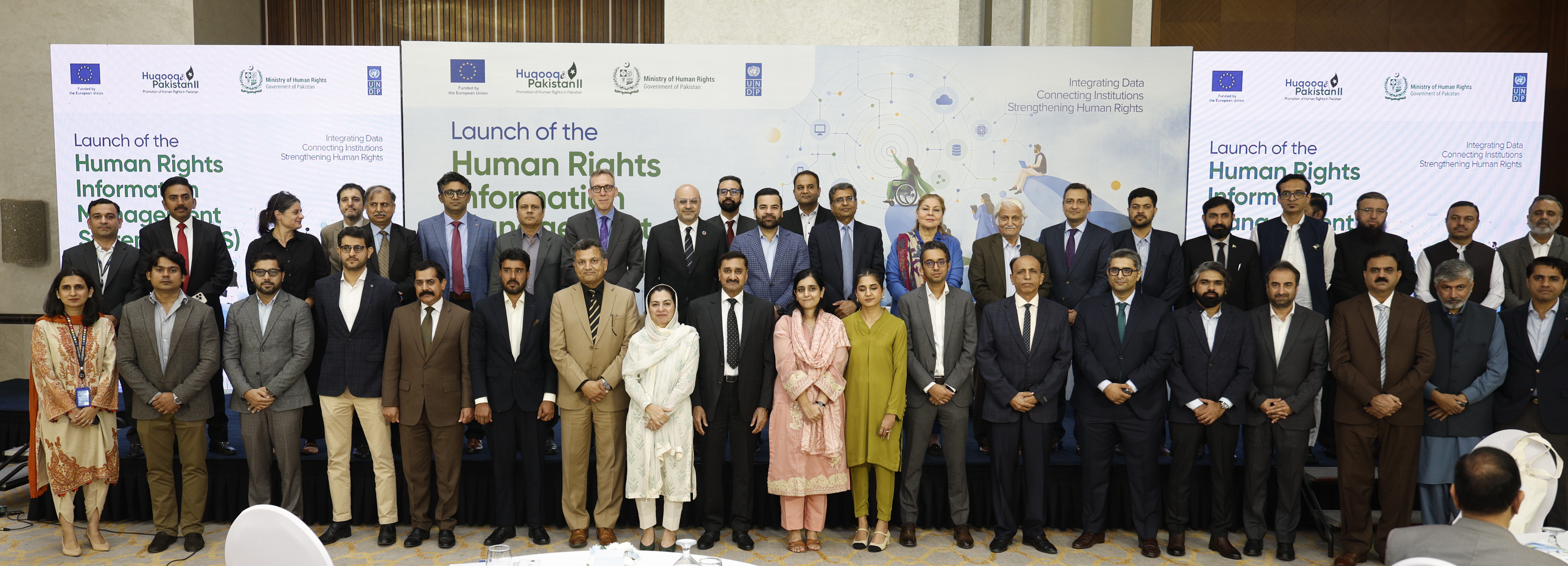
Islamabad, 11 November 2026: The Government of Pakistan, through the Ministry of Human Rights (MoHR), launched the upgraded Human Rights Information Management System (HRIMS), a digital platform designed to strengthen human rights monitoring, improve institutional coordination and support Pakistan’s reporting against its international human rights treaty obligations. The initiative is being led by the Ministry of Human Rights with technical and financial support from the United Nations Development Programme (UNDP) under the European Union-funded Huqooq-e-Pakistan II Project. The launch ceremony was attended by senior representatives of federal and provincial governments, human rights commissions, civil society, human rights defenders, international development partners and diplomatic missions. Barrister Aqeel Malik, Minister of State for Law and Justice, graced the occasion as Chief Guest and formally launched the upgraded HRIMS. He highlighted the importance of strengthening government institutions’ capacity to generate, share and utilize reliable human rights data. He noted that the system would facilitate coordination among federal and provincial institutions, support evidence-based policymaking and contribute to the effective fulfilment of Pakistan’s international human rights commitments. The platform was upgraded following a comprehensive nationwide needs assessment and extensive consultations with provincial stakeholders. It now offers enhanced digital infrastructure, standardized templates and streamlined processes for collecting, managing and sharing human rights data. These improvements will support consistent reporting and indicator-based tracking of Pakistan’s domestic and international human rights commitments. Jeroen Willems, Head of Partnerships at the Delegation of the European Union to Pakistan, welcomed HRIMS as a practical contribution to EU-Pakistan cooperation on human rights. “Sustained action on human rights requires a clear understanding of progress over time. The HRIMS can provide a valuable basis for recognizing achievements, setting priorities and following through on commitments, including under GSP+. Through the Huqooq-e-Pakistan II Project, the EU is supporting Pakistan in translating these commitments into measurable action,” he said. Abdul Khalique Shaikh, Secretary, Ministry of Human Rights, highlighted the government's institutional ownership of the initiative and its significance for strengthening Pakistan's human rights governance framework. “The fundamental purpose of HRIMS is to connect institutions through an integrated digital information management framework, enabling government institutions to contribute to a common and coherent human rights information architecture. The system will strengthen Pakistan’s capacity to meet its international human rights reporting obligations through data integration, evidence-based reporting and effective follow-up on international recommendations. This initiative marks an important shift towards digital human rights governance in Pakistan,” he said. Dr. Samuel Rizk, Resident Representative, UNDP Pakistan, emphasised the system's role in responsive policymaking. “Behind every data point is a person, a family or a community. By bringing this information together, the HRIMS can help institutions make decisions that respond to people's needs and protect their rights. UNDP is committed to working with the Ministry and provincial line departments to strengthen the evidence that guides this work,” he said. During the launch, Khaola Batool, Deputy Director, Ministry of Human Rights, demonstrated the platform's key features, highlighting how inputs from federal and provincial institutions will contribute to a consolidated picture of human rights progress across the country. The Government of Pakistan, through the Ministry of Human Rights, will continue to lead the institutional coordination and utilization of HRIMS, working in collaboration with provincial governments and relevant stakeholders to strengthen human rights monitoring, reporting and accountability.